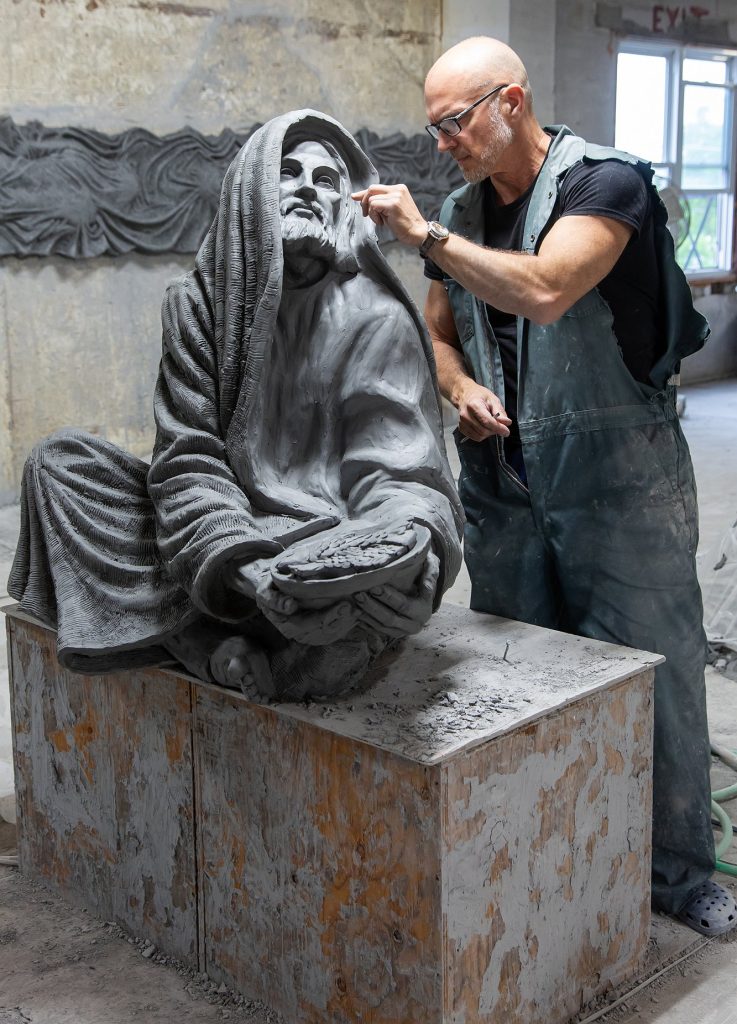
The piece is a direct translation of Matthew 25:36 — “I was sick and you took care of me.” Its placement at Santo Spirito matters as much as the sculpture itself: the hospital is considered the oldest in Europe, founded on the belief that caring for the sick and poor was a spiritual duty. Schmalz has spoken about wanting the piece to “reach out through history” to the pedestrians who pass it today, connecting that centuries-old conviction to the present moment.
He’s also talked about how invisible sickness tends to be — how society tends to look away from it rather than sit with it. He’s pointed to Pope Francis’s own openness about his physical fragility during his illnesses as a real-world example of the same lesson: that fragility isn’t something to hide, but a basic part of being human.
“The sick are often times invisible. Sickness is becoming visible. It’s something that we do not talk about… [but] to embrace it and to visit it and to take care of it and to heal it is part of being human.”
LOCATIONS AT A GLANCE
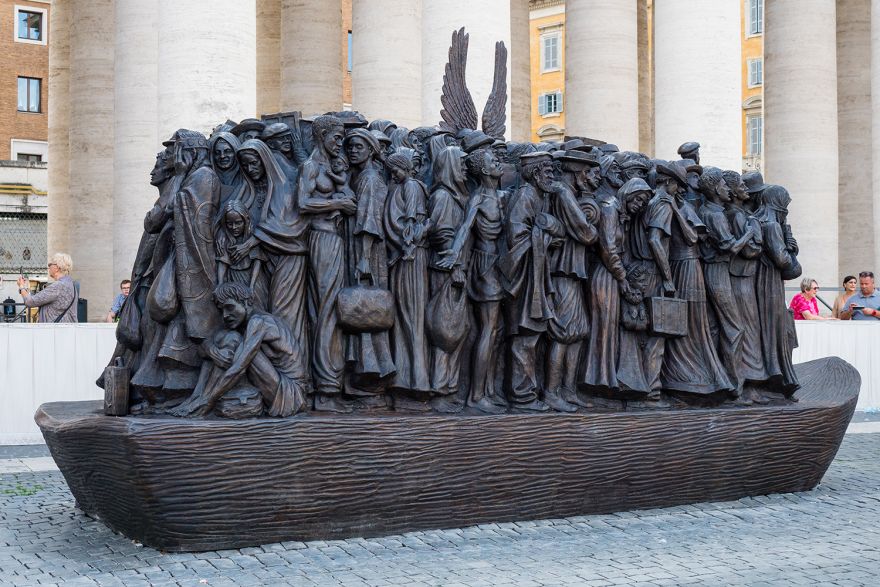
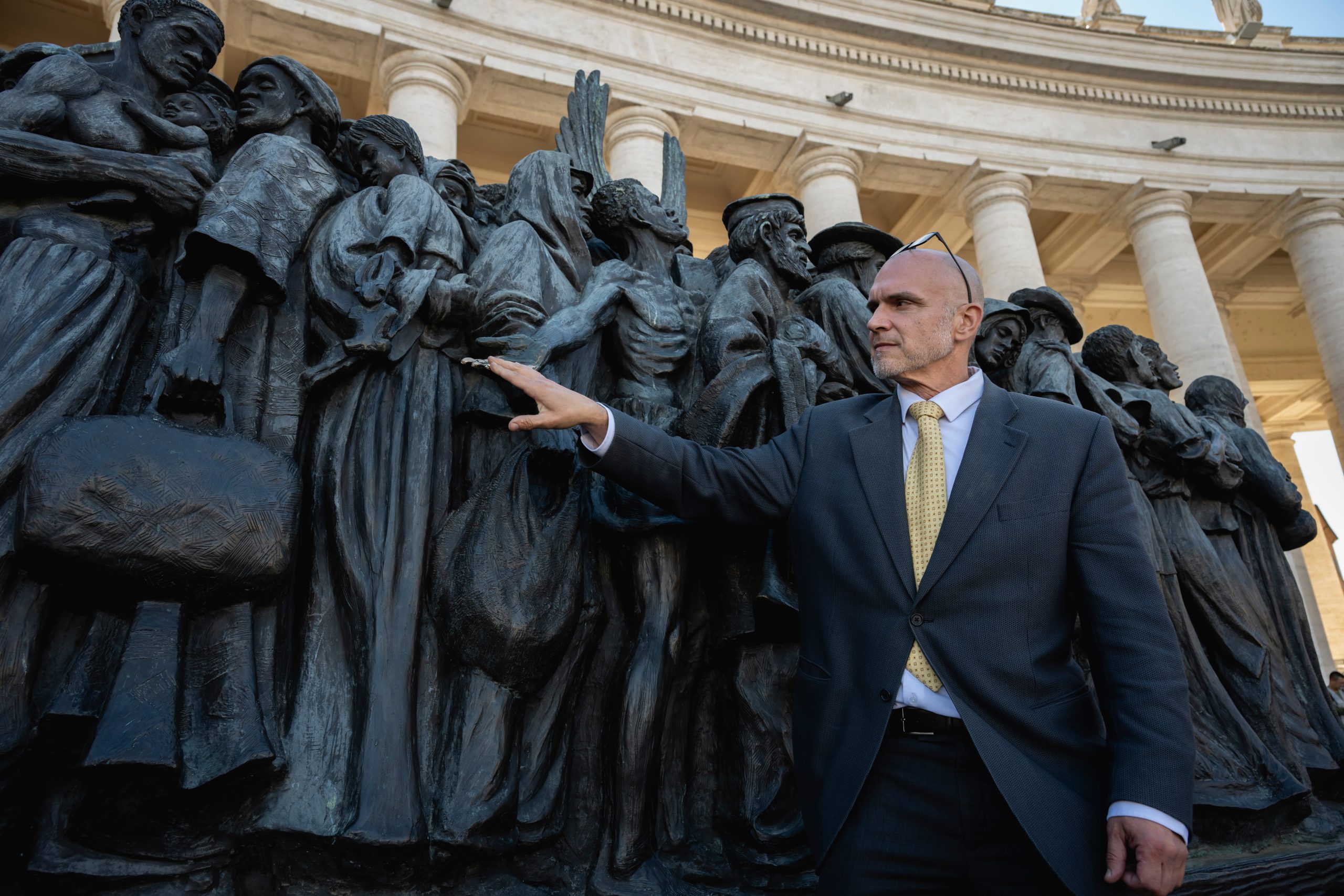
Santo Spirito Hospital, Rome — at street level outside the hospital entrance, steps from St. Peter’s Square, beside its companion piece When I Was Hungry and Thirsty.
Part of a Curated Route This sculpture is a stop on Connecting Pilgrims Through Compassion, the free audio-guided walking pilgrimage across Rome’s Schmalz sculptures.
Santo Spirito Hospital, Rome — at street level outside the hospital entrance, steps from St. Peter’s Square, beside its companion piece When I Was Hungry and Thirsty.
Part of a Curated Route This sculpture is a stop on Connecting Pilgrims Through Compassion, the free audio-guided walking pilgrimage across Rome’s Schmalz sculptures.